- Home
- Platform 02 · Food & Foraging
- Urban Foraging Gains Ground as Food Prices and Safety Concerns Grow
Urban Foraging Gains Ground as Food Prices and Safety Concerns Grow
As supermarket prices climb and food safety recalls make headlines, more Americans are turning to the centuries-old practice of foraging, with experts saying economic pressures and a desire to reconnect with nature are fueling the trend.
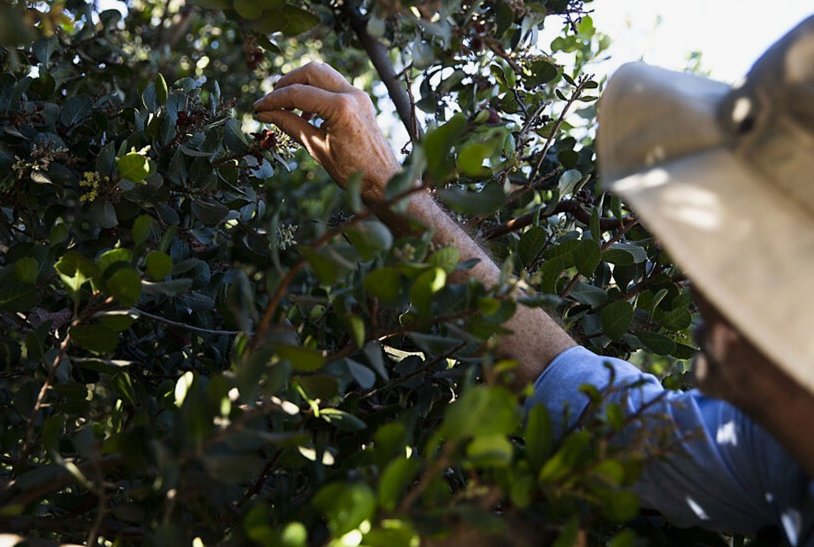
To most passersby, a five-inch horseweed pushing through a synthetic lawn in a dry Southern California suburb would barely register. Doug Kent sees it differently. An expert forager based in Orange, California, Mr. Kent describes the plant — an edible native sometimes used to flavor stews but typically dismissed as a nuisance — as a "gift." When he walks out his front door, he says he sees food coming up through sidewalks, parking lots, and neighbors' yards throughout his community.
Surging supermarket prices, high-profile produce recalls, and a desire to reconnect with the land are driving new interest in foraging, according to experts. "Anytime food gets more expensive, people get more exploratory and creative," Mr. Kent says.
Near his home, Mr. Kent points out miner's lettuce — a disc-shaped leaf he describes as tasting like a cross between butter lettuce and spinach with a hint of cucumber — as well as broadleaf plantain, a wide-leafed weed he says is more nutritious than store-bought kale or spinach. Dandelions, which he calls "the belle of the ball," round out a list of local finds: their young leaves work in salads, their yellow petals can be fried into fritters, baked into pancakes, or brewed into tea or syrup.
Economic pressures boost interest
Cost-of-living pressures, food inflation, and regional recessions have contributed to a surge in urban foraging and community gardening in the United States, according to a 2023 study in which researchers from Lincoln University in New Zealand analyzed consumer survey data on foraging behaviors in the U.S. The practice gained particular momentum during the COVID-19 pandemic, when global food supply disruptions and rising prices drew more people to it. Christopher Nyerges, a prominent Southern California forager who has run the School of Self-Reliance in Los Angeles for more than 50 years, says the Iran war and other ongoing global events causing supply disruptions have led to what he characterizes as serious interest in survivalist skills, including foraging.
Candace Miranda of Santa Ana, California, says she has long considered herself resourceful — she knows how to make her own candles and blankets — but recognized a gap when it came to food and plant knowledge. Concern about natural disasters, and what her community would do without electricity for days, recently prompted her to explore urban foraging. She now occasionally picks lavender, rosemary, and other herbs from neighbors' gardens, though she says it accounts for only a small portion of her meals. She recently joined a neighborhood walk led by Mr. Kent.
"As cities become more congested and open space becomes more scarce, people seek any relation with land, even if it is with a weed growing in concrete cracks," Mr. Kent says.
Heritage, technology, and new risks
Foraging has deep roots: for most of human history people relied on hunting and gathering wild plants, fruits, nuts, and roots, with crop domestication beginning to shift that relationship around 10,000 B.C. Even before the current rise in interest, Mr. Kent says, foraging has long supplied supplementary nutrition for many people in the U.S., particularly immigrants and diaspora communities he regularly encounters on his walks. "Foraging isn't just a trend for them," he says, describing it as a continuation of their heritage.
Technology has changed how people forage. Open-source platforms such as Falling Fruit map millions of foraging locations globally, allowing users to locate berry bushes, herb patches, and public fruit trees in their own neighborhoods, complete with harvesting dates. AI-powered apps such as iNaturalist can identify plants from a user's photo, though expert foragers caution that these tools carry real dangers: computer vision models do not analyze plants or fungi the way a trained botanist would, and several edible species have toxic or even lethal look-alikes that differ in ways a photograph cannot capture.
The dangers of inadequate knowledge have had documented consequences. California recently recorded the largest and most severe outbreak of deadly wild mushroom poisonings in U.S. history, attributed to a combination of surging interest in wild mushroom foraging and unusually heavy seasonal rains followed by extended warmth. As of May, 47 cases had been reported to the California Poison Control System, resulting in four deaths, according to California Department of Public Health officials.
Sustainability concerns alongside enthusiasm
Joel Robinson, an Orange-based expert forager known as Barefoot Joel and the founder and director of the nonprofit Naturalist for You — which teaches outdoor skills including urban foraging — says he has watched interest in the practice rise and fall over the years. He traces an earlier surge to survivalist and reality television programs in the early 2000s, such as "Survivor" and later "Naked and Afraid," as well as culinary trends linked to restaurants like Noma, the Danish three-Michelin-starred establishment founded in 2003, which helped reframe foraging as a culinary luxury.
Mr. Robinson says he welcomes the growing interest but worries about sustainability. While California's undeveloped areas hold greater biological diversity than any other state, he notes that this does not mean they can absorb increased foraging pressure, given that many areas are protected due to extinction threats. Foraging is illegal in some places, including California state parks, and different rules apply depending on land ownership and environmental law. Where a plant is rare or supports a declining wildlife species such as pollinators, experts advise leaving it undisturbed. For plants that are neither rare nor protected, the general guideline is to take no more than 10% to 20% of any single plant or patch. "It is important to understand how to interact with different plant species in mutually beneficial ways," Mr. Robinson says.
| Time | Service | Plat |
|---|---|---|
| 02:38 | Ozarks Foraging Guides and Private Chefs Offering Unique Edible Plant Experiences417 Magazine · 2026-07-31 | 02 |
| 22:22 | Vermont Program Shows Residents How to Forage and Cook Wild FoodsWCAX · 2026-09-22 | 02 |
| 07:00 | Social Media and Local Clubs Are Bringing Foraging to New AudiencesAppalachian Voices · 2026-09-02 | 02 |
| 07:00 | Durango Chef and Forager Finds Edible Plants Growing Along Local TrailsRocky Mountain PBS · 2026-08-03 | 02 |
| 07:00 | Robin Greenfield Shares Foraging Safety Tips Ten Months Into Year-Long Food ChallengeWJLA · 2026-08-06 | 02 |