- Home
- Platform 02 · Food & Foraging
- Social Media and Local Clubs Are Bringing Foraging to New Audiences
Social Media and Local Clubs Are Bringing Foraging to New Audiences
Foraging — the gathering of wild plants and fungi for food and medicine — is seeing a modern revival, driven by social media creators, online communities, the pandemic, and a growing desire to reconnect with nature.
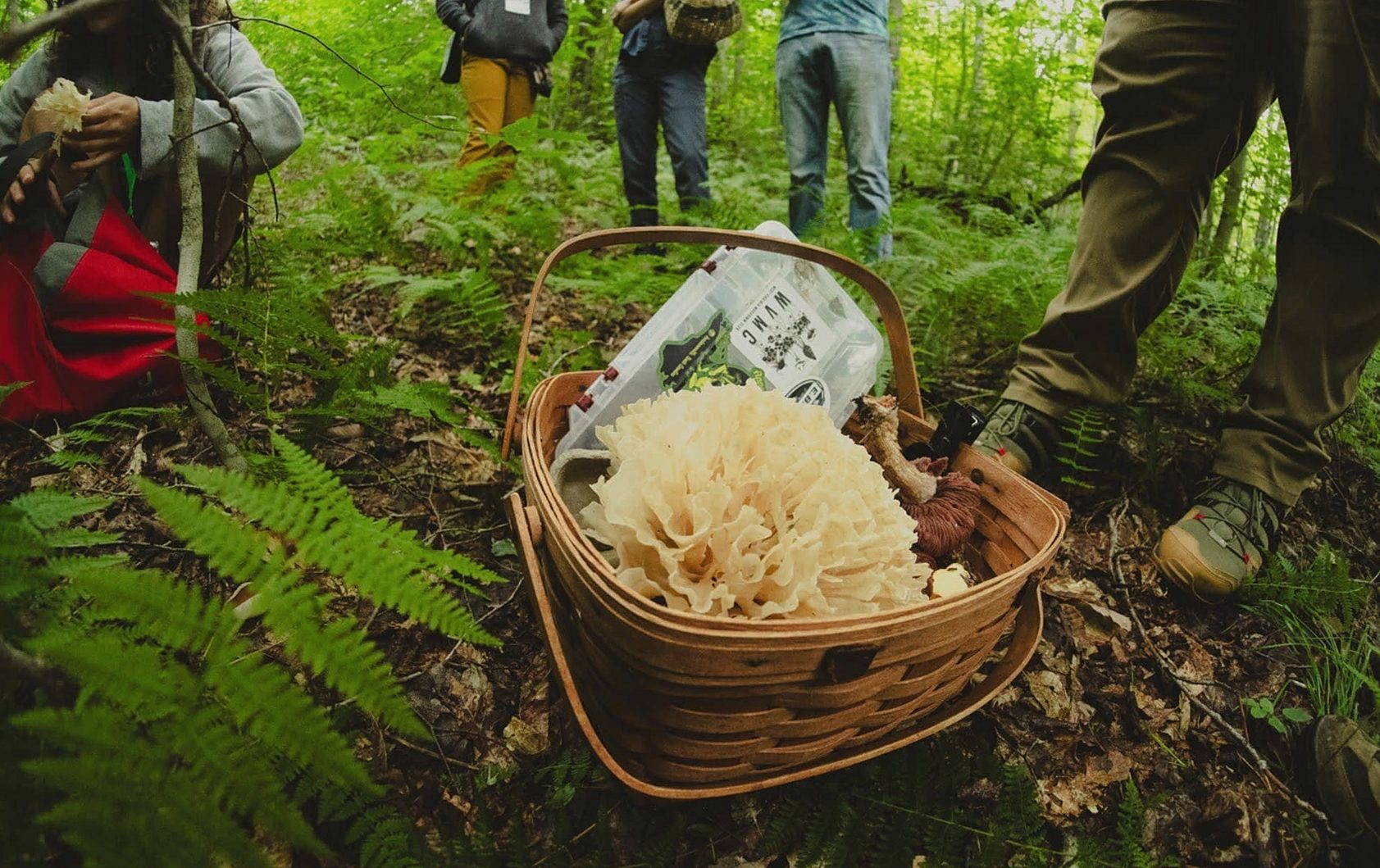
People in Appalachia and elsewhere have always foraged, and certain communities — particularly those whose traditions were shaped by Indigenous knowledge of local plants — never stopped. But a wave of online content, accelerated by the pandemic, has introduced the practice to a new generation of enthusiasts. Social media feeds and local organizations are now serving as entry points for both beginners and more experienced foragers seeking to sharpen their skills.
The internet's mushroom auntie
Gabrielle Cerberville, widely known online as "the internet's mushroom auntie," runs the TikTok account @chaoticforager and has accumulated 1.1 million followers, where she posts foraging guidance and plant identification. She is also a Ph.D. student at the University of Virginia in the music composition and computer technologies program. Cerberville traces her earliest foraging memory back to age five, when she picked wild blueberries in Pennsylvania.
"When I was a little kid, blueberries came in big hard plastic clamshells, and they tasted terrible; they tasted like nothing, and they were all mushy and weird," she said. "But wild blueberries were so good, and I think that kind of set me up to really appreciate wild food as being something extra special." She returned to foraging in earnest in her early twenties as an adult.
Cerberville describes a philosophy of living in balance with the natural world. "There is a way to live harmoniously with nature," she said. "There is a way to take from nature and also give back to nature, and all of that is part of foraging." Her videos began as personal diaries of foraging outings but shifted toward education during the pandemic, as viewers sought to learn how to forage in their own areas. She noted that people were looking for outdoor activities that felt safe, and that connecting with her audience became meaningful to her during that period as well.
Her 2025 book, "Gathered: On Foraging, Feasting and the Seasonal Life," is part field guide, part memoir, and part cookbook, arranged by season. She described the aim of the book as introducing new foragers to what the practice involves — how to pay attention and how to read a landscape, so they are not going in without any sense of what to look for. She also offers paid guided foraging walks covering plant identification and ethical harvesting.
"Foraging is a way of connecting. It's a way of connecting with your environment," Cerberville said. "It's also a way of connecting with other people because one of the first things you want to do when you make a really great forage dish is to share it with other people." She emphasizes that human beings are naturally equipped for foraging, with strong pattern recognition and the ability to learn through multiple senses, and that food found in the landscape is free, available, and abundant.
Other foraging voices online
Several other creators share foraging content focused on Appalachia and beyond. Alexis Nikole, known as @blackforager, has more than two million followers. Based in Ohio, she has also published a vegan cookbook. Tiffany (@tiffanyonthetrail98) has over 10,000 TikTok followers and covers flora, fauna, and ecology in Appalachia; while her content is not exclusively about foraging, she does explain what is edible and what to avoid.
Sustainable harvesting and Indigenous knowledge
Cerberville identifies unintentional overharvesting — removing a natural resource faster than it can reproduce — as a common problem among newcomers. "The people who are more prone to overharvest are newcomers to foraging, and there are people who only know one or two different plants or mushrooms, and they think that that's all that they're going to see," she said. Many conservation practices used to address this stem from Indigenous teachings.
A passage from the 2024 Forest Botanicals Region Living Monument Online Exhibit states: "Within many Indigenous worldviews, plants are considered to be relatives worthy of the care and respect one would give to their human relatives. Most forest herbs are very slow-growing and must be harvested sustainably to ensure their survival." The exhibit lists practices drawn from traditional Indigenous knowledge, including harvesting only a small portion of plants in any given area, never digging roots until seeds have matured, replanting portions of harvested roots, and choosing leaves over roots where possible.
Local clubs and networks can also help new foragers learn responsible harvesting. The West Virginia Mushroom Club, described by its president Dina Hornbaker as one of the oldest and most active amateur mycological organizations in Appalachia, is one such resource. Hornbaker began foraging mushrooms in her early twenties while working in landscaping and noticing fungi in the surrounding environment. "I just started noticing mushrooms popping up everywhere more frequently," she said, adding that her curiosity as an outdoor enthusiast drove her to learn more from there.
Tips for getting started
Cerberville's first recommendation for new foragers is to start in a familiar green space, such as a local park, and begin observing what is growing there. She advises paying close attention to details — smell, appearance, growing conditions, and leaf shape — and suggests joining a local foraging club. Additional guidance includes picking up local foraging guidebooks, researching toxic plants in your area (including those dangerous even to touch), and connecting with experienced foragers through mycological organizations.
| Time | Service | Plat |
|---|---|---|
| 09:00 | Urban Foraging Gains Ground as Food Prices and Safety Concerns GrowChristian Science Monitor - CSMonitor.com · 2026-09-10 | 02 |
| 02:38 | Ozarks Foraging Guides and Private Chefs Offering Unique Edible Plant Experiences417 Magazine · 2026-07-31 | 02 |
| 22:22 | Vermont Program Shows Residents How to Forage and Cook Wild FoodsWCAX · 2026-09-22 | 02 |
| 07:00 | Durango Chef and Forager Finds Edible Plants Growing Along Local TrailsRocky Mountain PBS · 2026-08-03 | 02 |
| 07:00 | Robin Greenfield Shares Foraging Safety Tips Ten Months Into Year-Long Food ChallengeWJLA · 2026-08-06 | 02 |