- Home
- Platform 03 · Nature & Ecology
- Common Birds and Butterflies Face Decline Despite Europe's Toughest Conservation Efforts
Common Birds and Butterflies Face Decline Despite Europe's Toughest Conservation Efforts
Three recent studies reveal that climate change and land-use pressures are driving declines in common bird and butterfly species across Europe and beyond, with even the most ambitious conservation scenarios failing to reverse the trend by 2050.
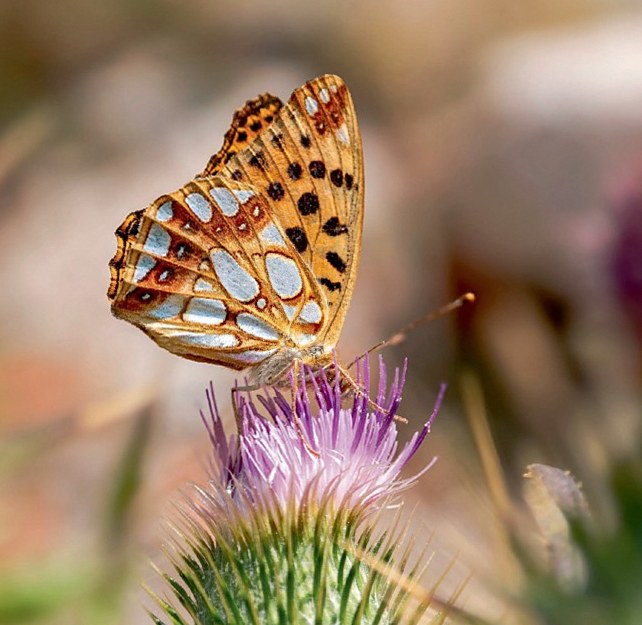
Ecologists and conservation decision-makers have long operated under conditions of uncertainty, a challenge that is intensifying as human-driven global change accelerates. Climate change, once a marginal concern in biological conservation during the late twentieth century and absent from early IUCN Red List assessments, is now universally relevant. Many conservation policies prioritize the most extinction-prone species, but the pervasive nature of certain disturbances may pose serious challenges even for species considered less vulnerable.
Declines projected even under ambitious scenarios
A study by Rigal et al., published in this issue, identifies an unexpected gap in conservation targets for terrestrial biodiversity across Europe. Drawing on two decades of monitoring data from thousands of sites, the researchers measured how local abundance trends in common bird and butterfly species relate to land use, land-use intensity, and climate change. They then combined this with spatially explicit projections of climate and land-use change to model abundance trends through to 2050, comparing a business-as-usual conservation scenario with alternatives set within the IPBES Nature Future Framework.
The alternative scenarios include relatively ambitious measures such as substantial expansion of protected areas and continued reductions in synthetic fertilizer use. Even so, the authors' models indicate that none of the scenarios — including the most ambitious — will be sufficient to halt, let alone reverse, average declines in bird and butterfly populations across much of Europe. The findings carry added weight given that Europe has some of the world's strictest environmental regulations and highest levels of public support for biodiversity protection, making them a cautionary signal for conservation efforts elsewhere.
Global butterfly range shifts linked to human pressures
A separate study by Chowdhury et al., also recently published in Nature Ecology & Evolution, compiled records of range shifts in butterfly species at a global scale and assessed evidence linking them to nine categories of potential threats, all directly or indirectly anthropogenic. These range from climate change and agricultural intensification to urban development and invasive species. Through a collaborative effort involving experts from 49 countries and the inclusion of non-English language sources, the researchers gathered data on more than 1,700 butterfly species across 105 countries.
Range shifts were found in 80% of the species examined, with many expanding their ranges while others contracted or moved to higher elevations. All nine threat categories were associated with range trends in at least some regions. Climate change proved the most consistent predictor, with two thirds of species showing evidence of climate-induced range shifts. Landscape transformation and disturbance — including agriculture — were most frequently linked to range contractions.
Monitoring data and modelling under scrutiny
The two butterfly-focused studies share notable common ground beyond their subject species. Neither confined its analysis to rare species — Rigal et al. in fact excluded rare species — and yet both detected widespread signals of climate change and land-use impacts across measures of species abundance and distribution. Both were also made possible by species monitoring efforts initiated or sustained by local experts, and both suggest that rising anthropogenic pressures will require biodiversity scientists and policymakers to revisit baselines, targets, and potentially their broader strategies.
A modelling study from a previous issue, by Keuth et al., adds further context by testing how species extinction risk assessments based on IUCN Red List guidelines perform when climate change is incorporated. The models were found to underestimate extinction risk for range-shifting species and are unlikely to provide adequate warning time to prevent extinctions through conservation action. The authors showed, however, that certain models can yield adequate assessments depending on the type of range shift dynamics involved, and recommended that models used for IUCN assessments be tested against observed range and population trends. Taken together, these studies illustrate how advances in modelling and data integration are helping biological conservation adapt to the accelerating pace of global change.
| Time | Service | Plat |
|---|---|---|
| 07:00 | Global butterfly ranges shifting dramatically in response to climate changeNature · 2026-08-05 | 03 |
| 07:00 | Satellite Data Underestimates Carbon Stored in Mature Forests WorldwideNature · 2026-07-31 | 03 |
| 07:00 | One in Ten Butterfly Species Has Shifted Range as Climate WarmsEurekAlert! Science News Releases · 2026-08-05 | 03 |
| 07:00 | Resource–Trait Coordination Under Multiple Global Change Factors Shapes Ecosystem StabilityNature · 2026-09-14 | 03 |
| 07:00 | Common Birds and Butterflies Forecast to Decline Across Europe Despite Conservation PoliciesNature · 2026-07-31 | 03 |