- Home
- Platform 04 · Slow Travel
- How Slovenia's Vipava Valley Is Quietly Building Its Own Tourism Identity
How Slovenia's Vipava Valley Is Quietly Building Its Own Tourism Identity
The Vipava Valley in Slovenia, largely overlooked in favour of better-known destinations, is seeing a gradual rise in small, family-run tourism ventures that aim to offer visitors an authentic experience while keeping the community's character intact.
The road to Pedrovo is steep and winding, its hairpin bends narrow enough to make passing a tractor an anxious prospect. Near the hamlet, the car is left behind and the approach continues on foot, up to a cluster of whitewashed, red-roofed houses set high on a karst hillside. The air carries the scent of wild sage.
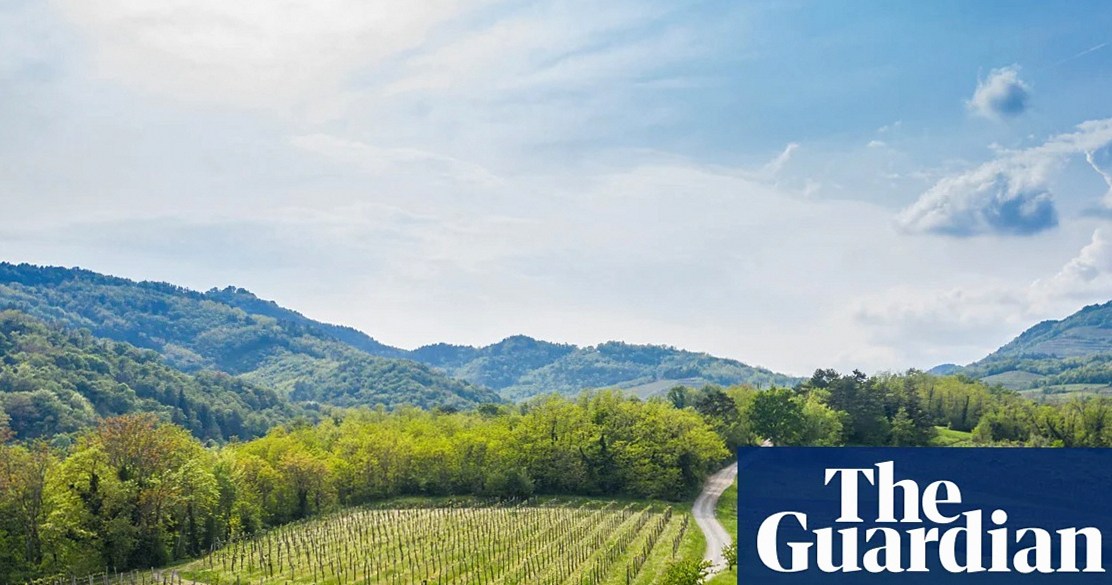
A hand-painted sign points to Čilčevi Farmstead. Stone steps lead down to a lush garden where a shaded table is laid with fresh cheeses made at the farm's own dairy. Below, the Vipava Valley spreads in both directions — a wide, flat plain enclosed by steep mountain slopes, with the Vipava River winding through fields and vineyards.
A region long overlooked by visitors
When the Vipava Valley appears in a Slovenian guidebook at all, it is usually as a brief footnote on wine. The area lies about an hour's drive south-west of Ljubljana and meets Italy at the cross-border city of Nova Gorica, known as Gorizia on the Italian side. Most travellers pass it by in favour of the Soča Valley to the north, drawn by the turquoise river and white-water rafting.
The valley's character is defined by the burja, a powerful wind that descends from the Alps, keeping the red earth dry, bending trees low, and creating conditions well suited to dry wines and cured meats. Tourism has historically taken a back seat here, but local entrepreneurs and producers are working to build a visitor offer that serves the wider community.
One obstacle to that development has been a shortage of accommodation, beyond a few unremarkable business hotels and scattered holiday cottages. Wellba, a boutique guesthouse in the village of Planina, is one place working to change that. A local couple, Marko and Tereza Kobal, converted a derelict farmstead into self-catering apartments and guest rooms, using traditional craftspeople and salvaged materials. Both grew up on this hillside before spending time working in Ljubljana, then returned to build a family business.
"People who travel want to experience something that is just the way it is, without embellishment, pretence, exaggeration — somewhere authentic," Marko said. The conversion was deliberate and unhurried: the building's original character, including a traditional 'black kitchen' with walls darkened by generations of wood smoke, was preserved throughout. "When we came here the building needed work but it had a real soul. We want the building to stand for another 300 years, so we took the renovation slowly and carefully," he added.
The guesthouse offers spacious accommodation with balcony views over a neighbouring farmyard and the valley. An adjacent derelict farm building is due to be converted and opened in 2027, and the couple are also developing a boutique hotel in Vipava town below. Their longer-term aim is for their children to eventually run Wellba.
Farms, flocks and a village reborn
Čilčevi Farmstead was started during the pandemic by Tom Ločniškar and Borut Kokalj, who had moved to Pedrovo and taken up farming. "We started to keep animals. Now we have 150, which is too many animals for just a hobby," Tom said. The farmstead's first customers arrived during lockdown — people out walking who wanted to support local producers. The farm keeps Istrska sheep and Drežnica goats, which graze on dry karst grasslands, rotating pastures on the hillside every four days. The dairy produces fresh goat's cheese with fenugreek and aged sheep's cheese, among others.
Tom noted that Pedrovo had around 1,000 residents in the early 1900s, but by the 1970s just two people lived there permanently, a figure that held until the 1990s. "The village was almost abandoned because people moved to the cities," he said. "It was the same in a lot of hill villages: life was hard and tractors didn't work on steep slopes." The permanent population has since grown to 20, roughly doubling during holiday periods when second-homeowners arrive. Alenka and Mark Smerajc were among the first families to return, raising three children and running two holiday cottages in former farm outbuildings, alongside a courtyard restaurant open to the public at weekends and on holidays.
Jani Peljhan, whose company Wajdušna organises tours in the valley, described how the absence of an established tourism industry left room to shape something from scratch. "In Vipava valley there was no tourism, so we got to decide how to build it." The company runs GPS-guided cycling tours on minor roads, as well as hiking and paragliding, and has been experimenting with 'wine trains' carrying visitors from Nova Gorica into the vineyards with local winemakers on board to lead tastings. A cycling route takes in Roman ruins in Ajdovščina and the town of Vipavski Križ, noted as one of the smallest towns in Slovenia.
Wine, food and a Michelin-starred kitchen
Wine tourism in the Vipava Valley remains informal. At Vina Lisjak in Zalošče, brothers run a small restaurant alongside their farm. "We opened the restaurant to show the wine," said Peter Lisjak. "It's all from our farm." Meals consist of generous platters of house-cured meat, aged mountain cheeses, fennel frittata and slow-cooked celeriac steaks with celery pesto and spinach, served family style, with wines poured straight from barrels in the cellar. At the Ferjančič vineyard, seventh-generation winemaker Matic Ferjančič explained how his father expanded the operation from five to 50,000 plants. "We work hard in the vineyard to make it easy in the cellar," he said, keeping one ear on a baby monitor during the conversation — the eighth generation asleep upstairs.
At the upper end of the valley's dining scene, Gostilna Pri Lojzetu at Zemono Manor offers a very different experience. Chef Tomaž Kavčič, regarded as a Slovenian slow food pioneer and holder of a Michelin star, serves dishes such as Vipava river trout with fermented apricots, langoustine bisque, and reimagined versions of traditional recipes including jota, a sauerkraut and potato stew. The atmosphere remains informal; a juniper plant producing flavoured vapour accompanies one dessert, but the restaurant is relaxed and family-friendly. Kavčič, whose night off it was, sat with friends at the back before making rounds of the tables to talk with guests.
Among those building businesses in the Vipava Valley, there is little apparent interest in the valley becoming a well-known wine destination. What seems to matter more is a form of tourism that allows the area to sustain itself without altering the qualities that make it worth visiting. Accommodation at Wellba Planina starts from £97 for a double room. The visit was supported by Vipava Valley Tourism and the Slovenian Tourist Board.
| Time | Service | Plat |
|---|---|---|
| 07:00 | Four African Countries Where Retirees Can Live Comfortably on a BudgetInvestopedia · 2026-09-18 | 04 |
| 07:00 | Reaching 50 Countries Taught Me the Number Never MatteredBusiness Insider · 2026-09-08 | 04 |
| 22:38 | Solid Waste Employee Stops Runaway Tractor-Trailer on U.S. 70 After Driver Found Disorientedwcti12.com · 2026-09-25 | 04 |
| 07:00 | Heavy Rain and Wet Roads Expected to Disrupt Monday Morning Commute in Omahawowt.com · 2026-09-14 | 04 |
| 07:00 | Victoria, Australia Offers River Cruises, Hiking, Boutique Stays and Slow TravelTheGATE.ca · 2026-08-10 | 04 |